Piping, yarn and turn-ups
How the reflective details work
Reflective material sends light back towards where it came from. That is why a detail that looks grey in daylight can shine when a headlight, torch or camera flash is pointed at it, and why it looks ordinary to everyone standing elsewhere.
The three details
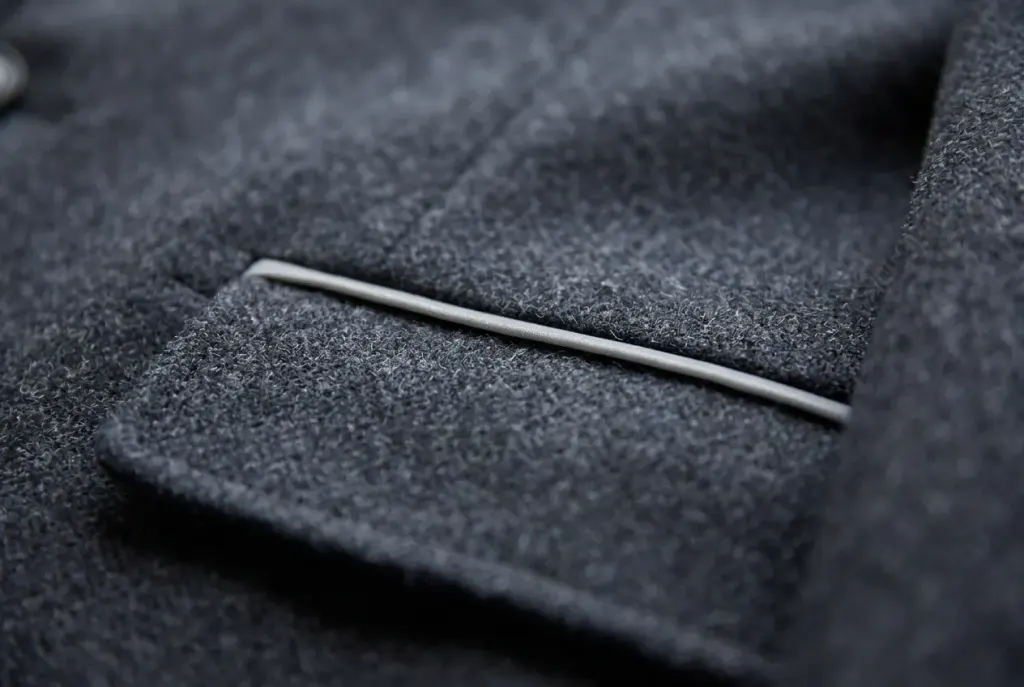
Q1 Piping
A narrow piping, about 4 mm wide, made of polyester with a reflective coating, sewn into a seam. In daylight it is a matt, pale grey line. You will find it on coats, jackets and overshirts: the back of a collar, the edge of a pocket flap, a back yoke, a cuff or a hem. Each product page tells you exactly where, and roughly how large the reflective area is.
Q2 Yarn
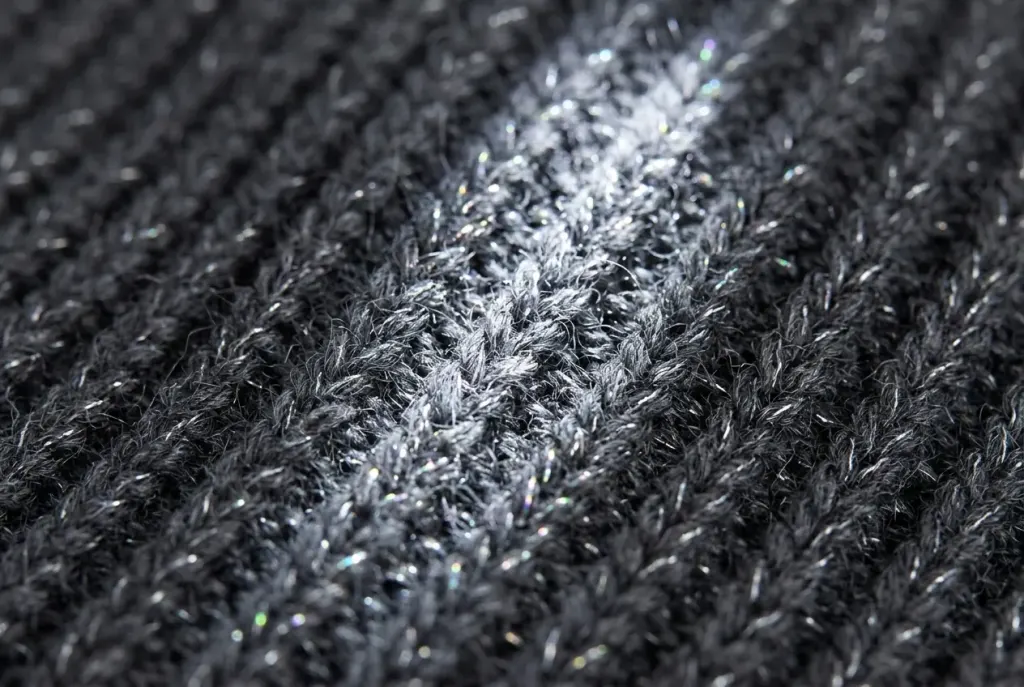
A fine reflective yarn knitted alongside the main yarn. In some pieces it runs through the whole knit, in others only through a cuff, a stripe or a rib. By day it shows as a light grey fleck. Because it is spread out as small points rather than a solid band, it glints rather than shines.
Q3 Turn-ups
A fine diagonal stripe printed with reflective ink on the inside of the trouser hem. Wear your trousers long and nobody sees it; roll the hem up once and it shows.

What the flash view shows
The flash view on each product shows the piece with a bright light falling on it from the direction of the camera, so that only the reflective parts light up. It is there to help you compare where each piece reflects and how much. How bright the details look to you in real life depends on the light, its angle, the distance and how clean the material is.
Washing the reflective parts
- Wash inside out at 30°C, or as the care label says.
- Do not use fabric softener: it can leave a film over the reflective surface.
- Do not tumble dry, and do not iron directly on the piping, yarn or print.
- Do not bleach or dry clean the reflective parts unless the label allows it.
Like most reflective finishes, the effect may become weaker after repeated washing and wear. Each product page lists the care instructions for that piece.
A design feature, not safety equipment
The reflective details only shine when light falls on them, such as car headlights. They are a design feature. They are not designed, tested or certified to make you visible to drivers, and they do not replace a high-visibility vest, bike lights or other visibility equipment.